
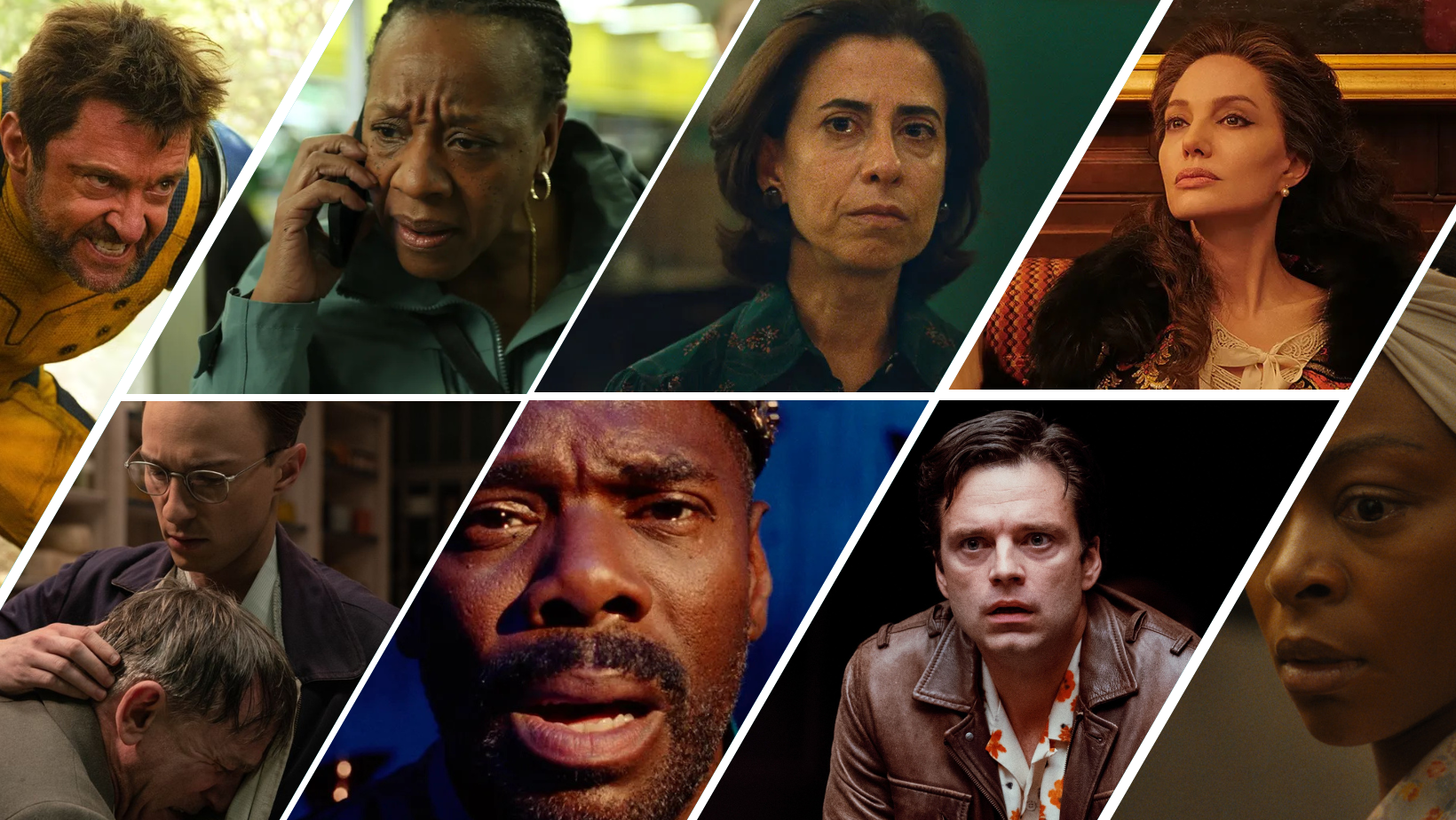

If you’re still on Twitter (or X, I guess) and care about film, you’ve likely encountered the discourse around the quality of the films released this year. One common refrain is that this year’s slate is noticeably weaker than years past. There are some shared causes, too, such as the lingering effects of the Hollywood strikes and the post-Barbenheimer lull.
I don’t subscribe to that way of thinking. 2024 was a strong year for movies. If it weren’t, developing my annual list of the year’s best film performances would’ve been like pulling teeth. Well, actually, it was like pulling teeth because there were so many standout performances to consider across the cinematic spectrum, from billion-dollar blockbusters to small independent entries. Last year, I had feted roughly 20 performances. This year, I settled on 25. Then I realized I missed one that had to be included. (Spoiler alert: it was Saoirse Ronan in The Outrun.) Because I wanted a clean multiple of 5 and didn’t want to take anyone off, I expanded to 30 performances (technically 32, but you’ll understand the exceptions below).
As I explained in previous years, this list is not meant to serve as an Oscar prediction list. Rather, these are the performances that I couldn’t stop thinking about. Maybe it was one specific scene that stood out or every scene they were in, that captured my attention. Perhaps they delivered a stirring monologue or said one word that struck at my core. They could’ve hung and spun from a chandelier or sat in front of a mirror as they made a flippant remark. Whatever they did on screen, it mattered to me, and it likely mattered to other viewers lucky enough to experience their performance.
For the sake of expediency (as I said, there are 30 entries on this list), I’ve included a Table of Contents to make the list easy to read. These are not listed in order of preference but rather alphabetically.
Without further ado, these are my picks for the Best Film Performances of 2024:
The Best Film Performances of 2024 (in alphabetical order):
- Adam Pearson, A Different Man
- Adrien Brody, The Brutalist
- André Holland, Exhibiting Forgiveness
- Angelina Jolie, Maria
- Anne Hathaway, The Idea of You
- Ariana Grande, Wicked
- Colman Domingo, Sing Sing
- Daniel Craig, Queer
- Danielle Deadwyler, The Piano Lesson
- Demi Moore, The Substance
- Denzel Washington, Gladiator II
- Drew Starkey, Queer
- Emily Watson, Small Things Like These
- Ethan Herisse and Brandon Wilson, Nickel Boys
- Fernanda Torres, I’m Still Here
- Glen Powell, Hit Man and Twisters
- Hugh Jackman, Deadpool & Wolverine
- Jharrel Jerome, Unstoppable
- Joan Chen, Didi
- Jonathan Hyde, Sebastian
- Kieran Culkin, A Real Pain
- Lupita Nyong’o, The Wild Robot
- Marianne Jean-Baptiste, Hard Truths
- Mikey Madison, Anora
- Nicole Kidman, Babygirl
- Sebastian Stan, A Different Man
- Saoirse Ronan, The Outrun
- Timothée Chalamet, Dune: Part Two
- Zendaya, Challengers
Adam Pearson, A Different Man

Something shifts in A Different Man when Adam Pearson appears as Oswald during a rehearsal of Ingrid’s (Renate Reinsve) off-Broadway play. The scene becomes brighter and lighter, as if it needed to reconfigure itself for Pearson’s crackerjack charisma. Oswald is Guy’s (Sebastian Stan) worst nightmare come to life: a man with a facial disability like he used to have who manages to command everyone’s attention and admiration through his affability alone. Oswald’s dynamism is a powerful counterpoint to Guy’s noxious self-loathing, and Pearson and Stan work beautifully together to emphasize the contrast. More than just a supporting foil, Pearson shines brilliantly on his own. The karaoke scene, referenced in the image above, is a perfect encapsulation of his screen presence: confident and playful, mesmerizing and profound. It’s no wonder that Guy looks utterly broken watching Oswald on stage; Oswald is everything that he isn’t. The same goes for Pearson and us as viewers.
Adrien Brody, The Brutalist

There are so many paths to explore in The Brutalist that it may take a few watches to identify them all. What is immediate from the very first scene is Adrien Brody’s exemplary central work as László Tóth, a Hungarian-Jewish architect who arrives on Ellis Island seeking refuge after World War II. Brody imbues an aching openheartedness in every one of László’s interactions, reflecting both his gratitude at the chance to find his American Dream and his lingering weariness of a world that doesn’t know what to make of him or his talents. The latter hurts the most, as László is brutalized by a million cuts, ranging from flippant antisemitic remarks to horrifying acts of sexual violence. Whatever the transgression and the subsequent response, Brody bears each moment with a staggering amount of grace and honesty, illuminating what may be the film’s most critical path: how vital immigrants are to the history of the United States and the grievous liberties taken against them.
André Holland, Exhibiting Forgiveness

How should one go about forgiving a loved one who caused them terrible harm? Exhibiting Forgiveness digs into the complicated answers through the eyes and paintbrush of Tarrell, an artist whose abusive father re-enters his life after finding religion. As Tarrell, André Holland demonstrates how difficult it is to let past transgressions lie, even as they threaten to upend your personal and professional lives. In one standout scene, Tarrell unleashes a devastating torrent of anger at La’Ron (John Earl Jenks) over his painful childhood. It would be overwhelming if not for Holland’s sharp control that always keeps the broken little boy in clear view. The same boy returns at the film’s end when Tarrell chooses to forgive his father but keep him out of his life for his own emotional safety. It’s a tricky resolution for an industry that favors easy ones, but again, Holland’s weary but resolute eyes and physicality make Tarrell’s decision clear. It’s very difficult to fault Tarrell’s choice; it’s impossible to fault Holland’s deeply felt performance.
Angelina Jolie, Maria

“I’m in the mood for adulation.” The idea of Angelina Jolie, one of the most towering cultural presences of the 21st century, as a grand dame delivering withering putdowns is almost too much to contemplate. As glorious as Jolie is in emanating an old-world, caustic elegance, her performance as beloved opera singer Maria Callas offers much more. In Maria, the last of his 20th-century women series (after Jackie and Spencer), Jolie reveals how much of Callas’s atmosphere was born from her fears about the degradation of her otherworldly talent and the possibility that the world had left her behind. Funnily enough, Jolie’s performance bears a striking resemblance to her work in 1998’s Gia, where she played the tragic supermodel Gia Carangi. While she is more restrained as Callas than as Carangi, Jolie taps into that same turbulent vulnerability to bring to life another woman whose natural gifts blinded the world to her scars. It’s a stunning full-circle moment for an actress who, after nearly 30 years in the spotlight, certainly has much more to reveal to us.
Anne Hathaway, The Idea of You

In The Idea of You, Anne Hathaway plays Solène, the mother of a teenage daughter who falls in love with her daughter’s favorite boy band member. The premise pushes the rom-com genre’s relatively lax boundaries, but Hathaway grounds the film and pulls out its moving observations on dating in your 40s as a parent. In one excellent scene, Solène recounts her ex-husband’s affair to said boy-bander Hayes (Nicholas Galitzine). Hathaway lets glimmers of Solène’s heartbreak, anger, and even shame at trying to forgive the affair slip through her bemused exterior. It’s no wonder that Hayes falls head over heels almost immediately. How Hathaway carries herself is also a factor. She renders Solène as a woman fully in control of her sexuality, capable of leaving a heartthrob (with a flock of millions of teen girls, mind you) gobsmacked as she removes a watch. What’s clear through it all is that Hathaway is having a blast putting Galitzine and the audiences through the paces, upending what a hyper-fantastical rom-com can deliver, thematically and performance-wise.
Ariana Grande, Wicked

No hair worked harder this year than Ariana Grande’s flowing, bouncing blonde tresses in Wicked. The diminutive pop titan uses every inch of her locks and the rest of her body to bring Galinda to vivid life. As the popular witch-in-training, Grande flounces across the screen with sparkling charm and razor-sharp comedic timing, hitting every mark with exaggerated aplomb. (Galinda dramatically collapsing on the edge of her bed? Very relatable.) She shows impressive range in Galinda’s musical numbers, molding her Grammy-winning pipes into an operatic instrument filled with irrepressible personality. Her chemistry with Cynthia Erivo is crucial to Wicked’s success, and Grande boosts her in satisfying ways while still making her own indelible mark on a well-regarded role. Is Galinda a bit insufferable? Of course. Still, Grande makes you fall in love with her, one hair flip, kick, and high note at a time.
Colman Domingo, Sing Sing

With his lyrical cadence and powerful presence, Colman Domingo makes it look so easy. And yet, his performances’ generosity demonstrates a deep commitment that could only come from scaling mountains of artistic material. That generosity is on full display in Sing Sing. In the film, Domingo plays Divine G, an inmate and de facto leader of his prison’s theatrical department. Surrounded by formerly incarcerated actors playing fictional versions of themselves, Domingo is thoughtful in how he cedes space to his colleagues and when he claims into the spotlight. He and the excellent Clarence Maclin forge a powerful bond of genuine vulnerability in an environment where remaining guarded is a valuable currency. Even when operating in that space, Domingo is beautifully open with Divine G’s emotions, wrapping audiences in his love for the arts and his passionate fight for clemency. Whether or not Domingo is as effortless as he appears to be on screen, Hollywood is made better by his output.
Cynthia Erivo, Wicked

How many times are you allowed to applaud during a musical? If there is a set limit, Cynthia Erivo puts it to the test as Elphaba in Wicked. Her first big musical number, ‘The Wizard and I,” is a walloping triumph of billowing innocence and a vocal climax that renders “jaw-dropping” obsolete. By the time you get to the show-stopping “Defying Gravity,” you might be exhausted by the urge to tamper down your praise. Erivo gives you enough of a boost to shatter your resolve and make you cheer as Elphaba takes to the skies. As titanic as her high-flying songs are, she is equally effective on the ground, conveying empathy for the discriminated animals of Oz, animosity and friendship with Glinda (Ariana Grande), and tentative romantic chemistry with Jonathan Bailey’s Fiyero. Her perceptive expressions out-of-song add even greater propulsive force to her singing, coalescing into a stirring, full-throated performance that blasts a hole in the Wicked canon to slot herself in.
Daniel Craig, Queer

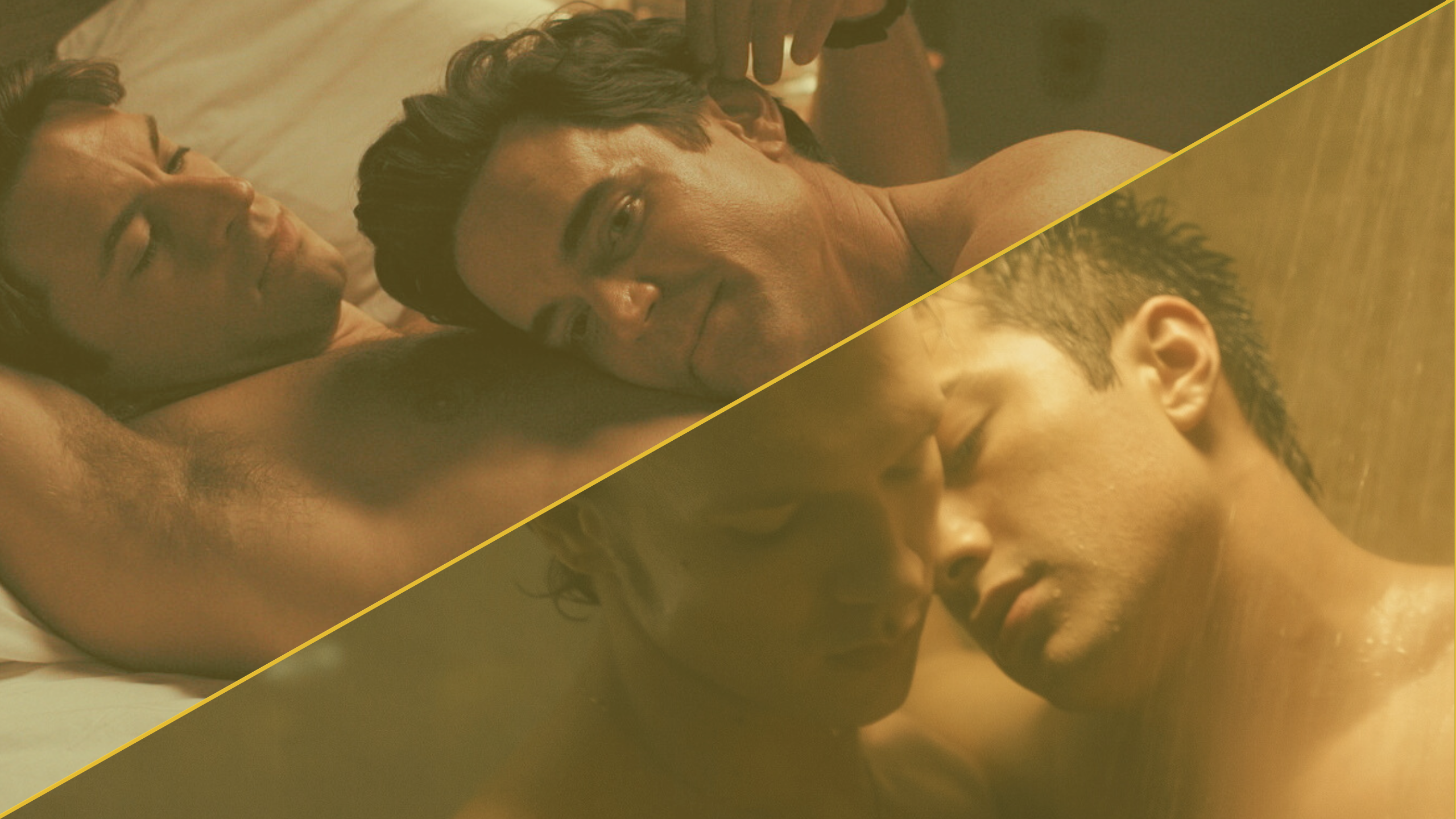
What would you do for a morsel of real human interaction? For William Lee, the ceiling is traveling to the jungle to find a hallucinogenic plant with your sometimes-but-not-really lover with the help of a scary botanist played by Lesley Manville. There are many trippy, metaphysical trappings in Queer, Luca Guadagnino’s challenging, profound film, and Daniel Craig deftly clears them all. He turns in a bold, raw performance as William, grasping on tight to the character’s shamelessness, hunger, drug dependency, and crippling loneliness. For an actor whose most famous character is notoriously unflappable, Craig doesn’t betray any vanity or unwillingness to go there. The results are remarkable, with him conveying a grounded yearning even in the most surreal of circumstances. Whether he’s embarrassing himself trying to get Eugene’s (Drew Starkey) attention or reaching out for his bare back after a sweaty sexual encounter, Craig inspires empathy for William’s search for real love and admiration for himself in how he conceives that search.
Danielle Deadwyler, The Piano Lesson

If you believe someone could be snubbed for an Academy Award nomination, then one of the most gutting in recent memory is Danielle Deadwyler for her extraordinary work in 2022’s Till. Deadwyler may have another shot with The Piano Lesson. She plays Berniece Charles, a widower who defends her family’s hand-carved piano from her brother Boy Willie (John David Washington), who seeks to sell it to buy land down south. Deadwyler’s Berniece is steadfast in her refusal to hand over the cherished heirloom, which ends up representing a host of bitter family crises, including Boy Willie’s involvement in her husband’s death. As she does in Till, Deadwyler holds equal space for her unwavering conviction and her grief, the latter filtered through a prism of tight repression. When she lets even a thread loose, she is spellbinding, both in her burgeoning desire for Lymon (Ray Fisher) and in her desperate performance at the piano to ward off a ghost. Even in a film filled with the supernatural, Deadwyler’s presence lingers long after the credits roll.
Demi Moore, The Substance

Arguably one of the year’s most metatextual performances, Demi Moore left Cannes reeling in The Substance, Coralie Fargeat’s oozing deconstruction of Hollywood’s obsession with youth and beauty. While ostensibly about Elizabeth Sparkle, the film can’t help but draw from past discussions about Moore’s life and career: her film roles that explored women’s agency like Indecent Proposal and Striptease, her boundary-pushing nude Vanity Fair covers, and her headline-making return to film at the age of 40 in Charlie’s Angels: Full Throttle, to name a few. Moore takes full advantage of her role in the zeitgeist and her natural movie-star essence to expose the emotional rot underneath Elizabeth’s sparkling smile. Her scenes in front of the bathroom mirror are some of the year’s best. Moore takes stock of her appearance, silently picking apart every imperfection until there’s nothing left but raw nerves. The twisted irony is that Moore is so captivating on screen that you miss her when she isn’t there. Of course, that is part of the point of The Substance. The other point is that Hollywood is so much better with Moore back in the spotlight.
Denzel Washington, Gladiator II

It feels like a crime that we’ve never had Denzel Washington as a power-hungry, messy bitch that lives for drama. Thankfully, Ridley Scott tapped the legendary actor to add a much-needed dose of chaotic Machiavellian camp to Gladiator II. Washington looks like he’s having a blast every single second, devouring the scenery with his movie star aura to the point that he pushes everyone around him to the farthest corners of the frame. Effortless as he appears to be, Washington still puts in carefully detailed work to make former slave-turned-gladiator owner Macrinus into the kind of menacing figure who could easily overthrow two ridiculous Roman emperors. His presence is so singular that it often feels like he’s acting in an entirely different film than everyone else. (His is the one where filling the Colosseum with water and sharks is a reasonable expense. It’s the better film.) After seeing Gladiator II, you’ll never want to see Denzel Washington without fine velvet robes and a side-eye ever again.
Drew Starkey, Queer

It takes a certain amount of presence to make Daniel Craig going down bad for someone believable. Drew Starkey achieves that by being one of the year’s most alluring figures on screen. As Eugene Allerton, Starkey moves like a ghostly siren, beckoning Craig’s William with enough passing interest to make him think he has a shot. What William is blind to, but what we see in Starkey’s eyes, is a bemused confidence that says, “I know you want me, but you’ll never have me the way you want, so enjoy the scraps I offer.” What Eugene doesn’t realize is that William’s longing for intimacy has pierced his aloof armor, which Dr. Cotter (Lesley Manville) points out to him near the film’s end. Starkey’s conveyance of Eugene’s surprise and discomfort makes for an affecting coda to his and William’s mystical journey. Starkey’s unexpected vulnerability in that moment is just as seductive as any of the film’s go-for-broke love scenes. Like he does with Craig, Starkey leaves you wanting more, and it feels safe to say that this is just the beginning for him.
Emily Watson, Small Things Like These

“Response.” That word carries blood-curdling power from the lips of Sister Mary in Small Things Like These. She oversees a local Irish convent with an iron habit, sending shivers down the spines of the young girls under her care (or, more accurately, her abuses) and the townsfolk who refuse to hold her accountable. Rather than feign innocence or piety, Emily Watson proudly wears Sister Mary’s corrupt egomania with a stone-cold face and sonic-boom tone tailor-made for intimidation. Even in the face of a genuine challenge by Cillian Murphy’s Bill Furlong, Watson is resolute in the fidelity of Sister Mary’s beliefs and her right to exercise them. Her resolve is so overwhelming that Sister Mary’s command for the congregation’s response to her prayers reads more like an unveiled threat than a commitment to God. Sister Mary may be a purported emissary of Christ, but Watson’s bone-chilling performance suggests the character’s motivations originate further south.
Ethan Herisse and Brandon Wilson, Nickel Boys

Nickel Boys feels like a rewrite or an expansion of the rules of American filmmaking, cracking conventions with RaMell Ross’s first-person perspective. If Ross is rewriting the rules, it’s fair to consider that critiquing key elements of his film also requires a shift. In that vein, Ethan Herisse and Brandon Wilson’s performances feel intimately linked by how we switch between their vantage points. Playing two boys essentially trapped at Nickel Academy, a Florida reform school in the 1960s, Herisse and Wilson craft inverse but complementary journeys that demonstrate how damaging their shared experiences were. With Herisse, we see Elwood’s clear-eyed optimism and faith in the justice system painfully chipped away by Nickel’s abuses. At the same time, Wilson finds bursts of hope in how Elwood melts Turner’s hardened pessimism in life-changing ways. While exemplary in their own rights, the power of their work is at its most potent when taken together.
Fernanda Torres, I’m Still Here

As excellent as 2024 was for horror films, nothing was as panic-inducing as Eunice’s first interrogation scene by the Brazilian army in I’m Still Here. Terror, confusion, and sharp intelligence fill Fernanda Torres’s face as Eunice realizes that an authoritarian military regime has viciously upended her and her husband’s idyllic beachfront life. What makes that agony so acute is how luminous Torres appears in the film before everything is ripped away from her. In every scene that follows, Torres shows us how deeply Eunice struggles to maintain normalcy for her children while trying and failing to navigate the system that murdered her husband. Each of Torres’s choices is intricately detailed to convey the rank devastation Eunice cannot fully feel. You feel it strongly on her behalf. Even Eunice’s relief at finally receiving closure a quarter-century later is burned at the edges by Torres’s returned brightness, duller than it was before her life changed forever. It’s soul-shattering work that shines a brutal light on the overwhelming costs of fascism.
Glen Powell, Hit Man and Twisters

Which Glen Powell is your favorite Glen Powell? If one man dominated the pop culture discourse this year, it was Powell, who scored not one but three successful films in a calendar year. He did it by demonstrating his ability to wear several different hats (and wigs) while still being one of the hottest men on screen. If you’re looking for the rugged cowboy type, Powell had you covered with the blockbuster legacy sequel Twisters, where he sent hearts a-flutter as a tornado-chasing Oklahoman with a heart of steel. Powell served up even more versions of himself in Hit Man, where he played a college professor posing as a hitman or several different hitmen. He clearly had a blast switching between personae, from smooth and suave to gruff and greasy to even Tilda Swinton. Whatever identity he wore, Powell tackled them with a winking but emotionally rich aura that recalled the movie star era of the 80s and 90s. Now one of the most in-demand actors in Hollywood, Powell is poised to continue dominating the conversation, no matter what hat (or wig) he wears.
Hugh Jackman, Deadpool & Wolverine

Deadpool & Wolverine would’ve been a resounding financial and cultural success regardless of the performances. Yes, the actors would give it their all, but amidst the explosions and cameos, you could forgive letting the costumes do the heavier lifting. That is part of why Hugh Jackman’s work is so surprising. He imbues the multiverse’s worst Wolverine with incredible pain, regret, existential dread, and anger instead of just being Deadpool’s straight-man foil. Jackman allows you to imagine how Logan’s entire existence was defined by failure. His misanthropic energy ultimately powers the film’s emotional core. Logan’s verbal beatdown of Deadpool in the Honda Odyssey is a vicious display aimed not just at his begrudging partner but at the sorry state of the world. 24 years after X-Men, Jackman’s boundless commitment to Wolverine is unmatched, especially as he builds upon every performance. We don’t know if Deadpool & Wolverine will be his last crack at the character. (If Disney shareholders have a say, probably not.) In any case, Jackman has crafted one of the all-time best characters in the comic book film canon.
Jharrel Jerome, Unstoppable

In a way, Jharrel Jerome gives two performances in Unstoppable. In playing college wrestler Anthony Robles, born with one leg, Jerome must communicate his unique strengths and strains, even though the real Robles is his body double. Then, there are the emotional aspects of Robles’s life. Jerome must explore Anthony’s volatile economic and domestic environment and convey how he balances that challenge with his academic and sports careers. The Emmy winner is excellent at doing both. Jerome expends physical effort through every drop of sweat, leaving no doubt that he is fighting for his spot on the wrestling mat. That effort is equally present in the film’s interpersonal moments. Jerome holds his steely gaze while revealing little glimmers of vulnerability and emotional pain in Anthony’s scenes with his mother, Judy (Jennifer Lopez), and his stepfather, Ray (Bobby Cannavale). No matter what side of Anthony’s story he plays, Jerome is triumphant and, yes, unstoppable.
Joan Chen, Didi

While Didi is largely focused on Chris Wang, an Asian-American teenager navigating the fraught dynamics of the early social media age, there’s another character who’s just as vital, vibrant, and emotionally gutting. Chungsing is more than just Chris’s ostensibly overbearing mother. She is a woman overwhelmed: by her husband’s absence, her mother-in-law’s criticisms and judgments, her children’s rebellion, and the deferment of her own dreams, goals, and desires. It’s a lot for one person to carry, and Joan Chen brilliantly communicates that strain in her soft, clipped speech and her deferential movements. She gives off the sense that she’s long overdue to snap, and when she does, it’s like a crack of lightning. Even in those brief but powerful bursts under pressure, Chen’s gentle grace hits hard. She helps remind us that parents are people with inner lives that don’t stop after a child is born. That may not be a lesson that a 13-year-old on MySpace can fully grasp, but the rest of us do, thanks to Chen’s stunning work.
Jonathan Hyde, Sebastian

In Sebastian, Max (Ruaridh Mollica) becomes a sex worker to provide him with the experience needed to complete his debut novel. His encounters are aimless until Jonathan Hyde’s Nicholas, a retired college professor, hires him for a night. Max and Nicholas bond over academics and literature, which transforms how Max views sex work and his sexuality. A hefty portion of their bond’s beauty lies in Hyde’s performance. He conceives Nicholas with breathless grace and yearning in his hesitant, posh cadence and his tentative physicality when Max tries to initiate sex. Hyde beautifully captures Nicholas’s search for a genuine companion alongside the resolution of his sexual urges. His physical and emotional chemistry with Mollica is powerful enough to nearly reshape the film from a character study into a gentle multi-generational romance. While the film has more on its mind, Hyde’s performance makes you wish that it lasered in on Nicholas and Max’s touching relationship.
Kieran Culkin, A Real Pain

A Real Pain opens and ends on Kieran Culkin’s face as he sits and waits in a New York City airport. His expression takes on many forms in those moments: expectation, curiosity, intrigue, boredom, and deep sadness. Those scenes alone could justify saying Culkin gives one of the year’s best performances. However, there are roughly 87 other minutes in the film, and Culkin maximizes every second. Culkin fashions his trademark irreverence into a wrecking ball, smashing through society’s inability to openly discuss or grapple with grief. Benji can be charming, snarky, and blissfully immune to social conventions, to the point of being rude. However, his gift is how honestly he feels the pain of the world around him. Culkin conveys that intense empathy throughout the film, as joyous as corralling the other tourists into a photo shoot at a World War II memorial and as shattering as his breakdown on the bus home from a concentration camp. Every one of his moments is memorable, but those two bookend scenes are unforgettable.
Lupita Nyong’o, The Wild Robot

Last year, I selected Robert Pattinson’s delightfully unhinged take on the Heron in the Oscar-winning The Boy and the Heron as one of my best performances of 2023. I almost didn’t have a counterpart this year, which shows how easy it is to undervalue the hard work of voice acting, particularly in animated films. How silly would it have been to not include Lupita Nyong’o’s touching performance in the heart-bursting The Wild Robot? Even as the rigid progeny to ChatGPT, Nyong’o’s voice for Roz evokes warmth and humor that makes you root for her mission to raise Brightbill (Kit Connor). As Brightbill grows, Roz does, too, and Nyong’o makes subtle but impactful shifts in Roz’s voice that reflect the maturation of her mothering instinct. If you cried as often as I did during the film (five times), more than a few of those tears came from how much emotional depth Nyong’o put into her robotic role.
Marianne Jean-Baptiste, Hard Truths

Seeing Marianne Jean-Baptiste go on one misanthropic tirade after another is reason enough to see Hard Truths because it is very amusing. However, Mike Leigh’s first collaboration with Jean-Baptiste since her Oscar-nominated work in 1996’s Secrets & Lies becomes essential viewing once the barbs are trimmed. Jean-Baptiste’s Pansy is not mean for mean’s sake, but is struggling to deal with the loss of her mother and her disillusionment with her unremarkable life. Without a real or imagined villain to sharpen her knives against, Jean-Baptiste shows us how bone-tired she is by her own existence. The Mother’s Day brunch at her sister Chantelle’s (Michele Austin) house is devastating, leaving you with the stinging reminder that there is truly no knowing what someone goes through behind closed doors. It’s been a long time coming, but Jean-Baptiste’s hilarious and heartbreaking work through Leigh’s camera was well worth the wait.
Mikey Madison, Anora

Chaos is the name of the game in Sean Baker’s Palme d’Or-winning film Anora, where a sex worker named Ani (Mikey Madison) embarks on a whirlwind romance with Vanya (Mark Eydelshteyn), a Russian oligarch’s son. What feels like a classic case of too-good-to-be-true ends up being just that. Vanya’s dad’s flunkies try to handle the messy situation before anyone of import finds out. Despite the hilarious insanity swirling around her, Madison cuts through it with a fierce determination not to be cast aside. Ani puts Vanya’s cronies through the paces, and you’re on her side every step of the way. Effective as she is amidst the chaos, Madison delivers finely-tuned work in the lulls, clueing audiences into Ani’s sharp intelligence and her desire to be truly swept off of her feet, however unrealistic that may be. Her work makes the film’s final stretch heartbreaking as she picks up the pieces after letting her guard down. Chaos or not, Madison delivers a wonderful, star-making performance.
Nicole Kidman, Babygirl

It feels weird to call Nicole Kidman “brave” for doing Babygirl, given the totality of her career. Still, there’s something remarkably unguarded in her performance as Romy, a CEO who embarks on a torrid affair with her intern, Samuel (Harris Dickinson). Kidman perfectly balances Romy’s sizzling need for a dominant-submissive dynamic with her disbelief over that need, acknowledging the absurdity of that premise. She’ll huff through crawling on the ground or sipping a glass of milk while exuding a feeling of relief at Samuel seeing and validating her desires. That tension adds a comedic tenor to the film, but Kidman and director Halina Reijn control it, so it’s never at Kidman’s expense. If her performance isn’t brave, perhaps it serves as a reminder (in case anyone had the nerve to forget) that few actors can match her nerve.
Sebastian Stan, A Different Man

In an era of mega-franchises and the supposed death of the movie star, it’s easy to discount an actor caught in the middle. However, if you’ve paid attention, Sebastian Stan has been building a résumé of daring performances of psychologically complex characters. In 2024, he delivered two standout performances in A Different Man and The Apprentice. His work in The Apprentice is strong, but A Different Man is Stan at the height of his powers. He essentially crafts two characters in one body. As Edward, a man with a facial deformity, Stan moves through space as if he’s always about to apologize, emotionally wrecked by how he believes people negatively perceive him. As Guy, his assumed identity after an experimental treatment reverses the deformity, he still carries that same ungainliness, layered with false outward confidence. The truth lies in Stan’s eyes, which thoughtfully communicate the confusion and devastation of being ignored and mistreated and how there are no easy solutions for that psychological pain. A Different Man codifies him as one of the best actors to navigate the MCU machine and positions him to succeed beyond it.
Saoirse Ronan, The Outrun

In The Outrun, Saoirse Ronan plays Rona, a woman recovering from the ravages of alcoholism and reconciling her past mistakes and choices with who she wants to be. That past is raw and ugly, and Ronan goes through great pains to visualize that for us amidst a mosaic narrative structure. The film frequently weaves in and out of flashbacks, but Ronan guides us through the devastating lows and somewhat peaceful middles with a take-no-prisoners approach to Rona. She will scream, cry, crawl on pub floors, and hiss destructive insults without even a hint of holding back. Every incident of Rona’s out-of-control alcoholism feels like a gut punch, but you endure because of Ronan’s ferocious commitment to Nora Fingscheidt’s vision.
Timothée Chalamet, Dune: Part Two

There must be something in that blue sandworm juice. Not only does it turn the relatively mild-mannered Paul Atreides into the fated (and feared) Fremen warrior Lisan al-Gaib, but it also catapults Timothée Chalamet into blockbuster nirvana. After he drinks the Water of Life, dies, and is reborn from Chani’s (Zendaya) tears, Paul stands before a gathering of Fremen leaders and commands the room as the Voice from the Outer World, recounting a man’s lineage with a borderline-sinister air of confidence and inevitability. As Paul dons his father’s rings and roars his claim to bring the Fremen to the Green Paradise, the sheer power that Chalamet radiates is as bone-chilling as it is exhilarating. That scene alone is not just the start of a new era on Arrakis but the arrival of Timothée Chalamet as a genre-shifting, butts-in-seats movie star.
Zendaya, Challengers

In Challengers, Zendaya’s Tashi Duncan sits in the stands during her husband Art’s (Mike Faist) tennis match against his former best friend and her former lover Patrick (Josh O’Connor). Her frustration is palpable. She resents Art’s disinterest in the sport she reveres. She is annoyed and aroused by Patrick’s ability to get under her skin all these years later. Finally, she is disgusted by her inability to play anymore, leaving her to watch from the sidelines when she knows that she could dust them both if it weren’t for a devastating injury. Zendaya openly, silently wears that entire suite of emotions on her face, contextualizing her three-way relationship with the two men without the aid of flashbacks. Zendaya’s performance of Tashi’s bitter resentment, coupled with her clever juggling of Art and Patrick’s dueling affections, make Challengers a psychosexual triumph. It also deepens her claim as a leader of the new Hollywood A-List.


Leave a Reply