
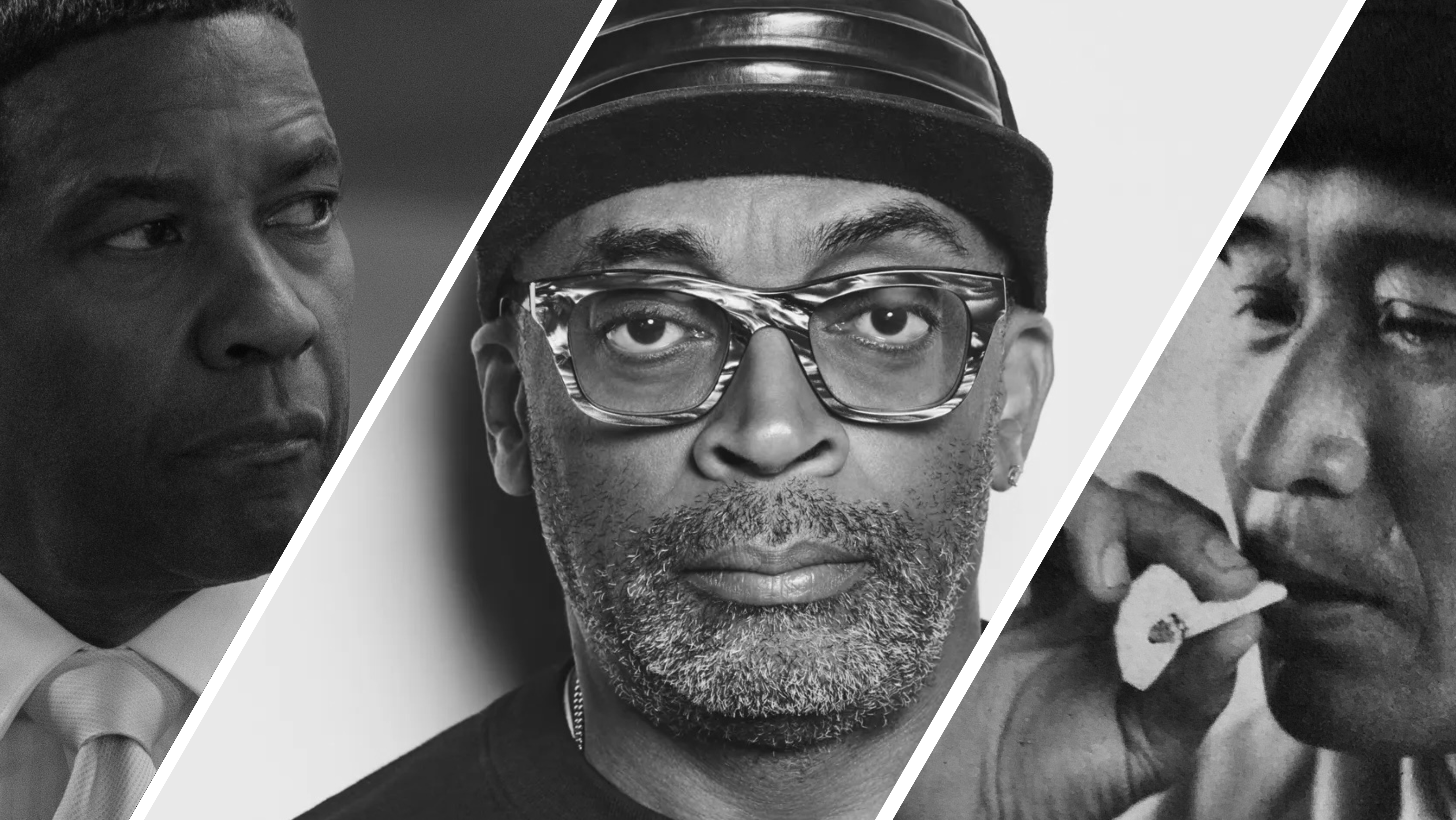

It all started with an email with an empty subject line.
A few days after I published my review of Highest 2 Lowest, the latest Spike Lee joint starring Denzel Washington, I received an email. I was at a screening of another movie when the notification popped up on my watch, and when I saw it had no subject line, I almost deleted it. After all, who sends an email without a subject line unless it’s spam? Before I could hit delete, I scanned the first line, which alluded to my review (specifically that the sender “did give a fuck, because Denzel would beat [his] skinny butt”). It seemed inconceivable, and I certainly couldn’t respond or react since I was in a screening, but my mind was racing at the possibility that Spike Lee, the filmmaker whose film I had just been clapping to a week prior at the North American premiere at the Brooklyn Academy of Music the week before, had seen my review and enjoyed it. (“You dig me,” the email concluded.)
The next day, I confirmed that it was indeed Spike Lee who emailed me, and a week later, we were in conversation for Geek Vibes Nation. It was very much that: less of a formal interview and moreso two people of different stations, experiences, and perspectives on the same wavelength for roughly 45 minutes. It was a wide-ranging chat, one that couldn’t possibly be encompassed in a piece that was solely about Highest 2 Lowest. It touched on our pasts, our presents, our parents, and how we define New York. We hopped all over the place, which genuinely had me concerned about whether I would be able to fully capture the essence of our conversation. I believe did after two rewrites, but I also knew that there was so much more to share, hence my second “Director’s Cut” (after my conversation with Sebastian Stan in January). As with that piece, I hope that this complete Q&A offers some more meaningful insight into one of the most prolific and impactful filmmakers of this or any other era, someone who I am deeply grateful to for sharing his time with me.
[NOTE: This interview has been slightly edited for clarity.]
Brandon Lewis: To get us started, how did you find my review?

Spike Lee: I’m on Instagram. And listen to this, Brandon, and this really goes into the story: people are in the movie because I’m on Instagram. Jensen McRae, who I call a “black Joni Mitchell,” who stalking [David King’s] office at Stackin’ Hits. Aiyana-Lee, who wrote the title song, the end song, “Highest 2 Lowest.” Here’s the thing, though. I’m never gonna say I discovered someone. I don’t say I found them, but I gotta find another word. It can’t be discovered, it can’t be found. But I’m on Instagram, you know?
BL: “Uncovered”? Maybe they were just waiting for you?
SL: Here’s the thing, though, my brother. Back in the day, artists had to move; wherever you were, you had to go to New York or LA. Nowadays, the rent that Madonna and my brother David…back then, they could afford to go to New York. Not now. Now, you just put yourself on Instagram, you know? And that’s one of the good things about technology. I will say that.
BL: I would agree. I didn’t have a traditional pathway into film criticism, either.
SL: Where’d you go to school?
BL: Trinity College in Hartford, Connecticut.
SL: Where’d you grow up?
BL: Jamaica, Queens. And I got a scholarship to Trinity.
SL: You didn’t apply to NYU?
BL: I didn’t. You know what it was?
SL: Was it the money?
BL: Not even that. I [applied] early decision at Trinity, but I wanted to go to Syracuse, to the Newhouse School for Journalism. My mom went, “I will kick you out of the house and I will never speak to you again if you turn down Trinity, and that’s how we did it.
SL: Four years?
BL: Four years.
SL: [Bows]
BL: Thank you very much. It was $150,000; I would have been in the hole.
SL: Well, I’m glad you did that before what’s-his-name took….
BL: Listen. I think my timing was perfect…which leads to my first official question.
SL: You got a half hour.
BL: I got a half hour with you?
SL: Yeah. It’s love, baby. I really dug your review. You’re a thinker.
BL: I try.
SL: Oh! What did Yoda say?
BL: I’m not a big Star Wars fan, so I need you to tell me what Yoda said.
SL: There’s no “try”: do. I say that to my students. I’m a tenured professor at NYU, been there for 30 years. The first day in class, which is coming up, that’s what they get.
BL: Well, I do think, and I thought a lot about [Highest 2 Lowest]. I had a ball.
SL: Did you see it on a screen, or have you been able to see it in a theater?
BL: I saw it at the premiere at BAM.

SL: You were there? How’d you get in?
BL: I know people! Don’t play with me! [laughs]
SL: [Laughs] Well, I’m glad you ventured from Jamaica, Queens, to the People’s Republic of Brooklyn. Fort Greene.
BL: You were acting like we were in the boondocks…I mean, we kind of are.
SL: Like I said, I got love for LaGuardia and JFK Airport. What else I got there? I got love for Arthur Ashe Stadium. I love tennis. So yeah, I’ll leave Queens alone. I love Queens. It’s the most diverse borough.
BL: Yeah, you can walk from one neighborhood to the next…Jamaica doesn’t look like St. Albans. Laurelton doesn’t look like Bayside. It’s a whole new world in every little pocket.
SL: Let your article say, “Spike Lee has love for Queens.”
BL: That’s the headline.
SL: And the Bronx.
BL: Not Boston?
SL: I said New York City? [Laughs] You know what I do? I leave Staten Island out of it, with the exception of Wu-Tang and the Verrazano Bridge, and the Staten Island Ferry. Back in the day, we didn’t have air conditioning. I’m talking about those hot, brutal, New York City summers. So we would get in the car and go back and forth. My father had a yellow Citroën station wagon, and we’d go back and forth. You saw Crooklyn; that’s autobiographical… We couldn’t afford air conditioning.
BL: We can barely afford it now.
SL: Con Ed was turning off water, air, electricity, the gas.
BL: How did you manage that?
SL: My father refused…he was the number one folk jazz bassist. And when Bob Dylan went electric, Bob asked my father, “You gotta play electric.” My father said, “I can’t do it.” And so, consequently, my mother had to work. The great Alfre Woodard played my mother [in Crooklyn] and the great Delroy Lindo played my father. My mother had to support the family because my father refused to play the Fender Bass. He could not do it.
BL: Got it. Moving to Highest 2 Lowest, one of my favorite films of the year so far…
SL: Since Sinners!
BL: Yes, since Sinners, and also Sorry, Baby, that’s my top three so far. What made you want to tell this story at this particular moment in time?

SL: Well, this script had been going around town for years, and it got sent to Denzel Washington. He called me up. I didn’t recognize the motherfucking number. I go, “Who it is?” He goes, “Spike, it’s D. Look, I got this script. I’m gonna send it to you, FedEx. Read it.” It was a 45-second phone call, and before I hung up the phone, I knew I was doing it.
BL: How did you know?
SL: Denzel and I hadn’t worked in a while. It wasn’t until later that a journalist told us that it had been 19 years between these two films [Highest 2 Lowest and Inside Man]. We both didn’t know that. We thought it was, like, yesterday.
BL: Did it feel like yesterday once you guys got back on set?
SL: Here’s the thing, though. We did not have to go through a reintroduction. Denzel said it best. He called me because we have love and trust, trust and love. That’s it! Mo’ Better Blues, Malcolm X, He Got Game, Inside Man, and this was the fifth one. Five for five!
BL: All iconic films.
SL: And Denzel said, and he hasn’t said it to me, but he says, “Spike, New York City. Spike, done! That’s spelled in Brooklyn, D-U-N. Motherfucker, D-U-N. And motherfucker spelled, M-U-T-H-A-F-U-C-K-I-N, apostrophe. I spelled it wrong?
BL: No, you got it 100% right.
SL: In Brooklyn-ese, right? I’m gonna stop interrupting, because I know you got questions.
BL: No, I’m enjoying this conversation. It feels natural and puts me at ease because, I’ll be honest, I was like, “Brandon, you’re talking to motherfucking Spike Lee, get your shit together.”
SL: Spell “motherfucking” in Queens.
BL: We drop the apostrophe and put the G at the end.
SL: Love for Queens, let’s make that clear.
BL: It’s funny you mention that, because when you emailed me, you said-
SL: What did I say?
BL: You said, “I do give a fuck.”
SL: You thought it was fake at first, right?
BL: I did, because there’s no subject, and I was like, “This is a scam. Why would someone do this?” And then I read it, and it felt really familiar; then I realized it was Spike Lee, and I was like, “Oh, Christ.”
SL: Did you show your mother, too?
BL: My mother was like, “You need to say, ‘Mr Lee,’ and thank him.” She got me together. She was like, “If you embarrass me…” And I’m like, “You’re not meeting him, I am!”
SL: Well, tell your mother she raised a very intelligent young Black man.
BL: Thank you. You saying that, I don’t need anything else, and she’ll tell all her friends. But in your email, you said, “I do give a fuck, because Denzel would beat my skinny butt.”
SL: [Laughs] The way I figure it, he’s two years older than me, so I’m the little brother with Denzel. I’m Robin, right?
BL: Yeah, and the point I was trying to make in my review was that it felt like you maybe were less beholden to other interests. Like, the people who got it, got it, and the people who didn’t or weren’t trying to get it, didn’t, and that wasn’t something you were necessarily worried about.

SL: You know what the answer is? [Points to a photo of Akira Kurosawa] This guy right here, Kurosawa. I believe that he wanted me to do this film. I met him. He wanted Denzel and I to do this film. I believe that. And now, people say what they want, I don’t give a fuck.
BL: There you go!
SL: We got the blessing of the Kurosawa family. He knew who I was; he loved my filmmaking. I believe that he gave us the blessing. Also, remember that High and Low was originally a novel. Ed McBain. So this is not an original script. He adapted a novel. Let me put you on game: I knew right away that there are purists and stuff like that, so I said, number one, it’s not going to be the same title. Highest 2 Lowest, and the number “2”, that was my shout-out to my brother, Prince. He always did that, numbers for words and shit.
BL: I was wondering if that was a Prince reference, because it was something that stuck out to me in his work in the ’90s, and I thought I was reading too much into it.
SL: No, you weren’t, you were on it. You got your Prince antenna. Also, [Highest 2 Lowest] is not a remake; it’s a reinterpretation. And let me tell you where I got that from. My father’s a great jazz musician, and I thought about the history of great jazz musicians taking songs from the Great American Songbook.
BL: Cole Porter…
SL: Rodgers & Hammerstein, Julie Andrews, “My Favorite Things.” What did John Coltrane do with that? What did Miles Davis do with “My Funny Valentine”? We go on and on and on. So Denzel and I, in my mind, I never told him this, but Denzel and I were jazz musicians who were doing what our fellow jazz musicians were doing. Reinterpretation. I knew we were taking the position of bringing this great film by one of the greatest filmmakers, and our approach was, we were jazz musicians. Denzel was Coltrane, I was Miles. I never got to meet Mr. Coltrane, but I did a short film for Miles, Tutu Medley. Check it out.

And that was our approach. With all respect and love, but we’re not Japanese. We’re not making this film in post-war Japan, 1963. Denzel was not the great Toshiro Mifune; he was not a shoe executive. This one, we brought it up to today, but they stand alone, and we had nothing but respect for Mr. Kurosawa and the family. To be honest, getting the stamp of approval of the Kurosawa family, we were off. We do what we gotta do. At the same time, respect and love for [High and Low] and the Kurosawa family.
I was speaking to a Japanese journalist, and I was shocked when he told me that the young people in Japan don’t even know who Kurosawa is.
BL: Really? It’s fascinating because, in America, when you look at the great masters of cinema, his name comes up alongside Truffaut-
SL: Don’t leave out my brother, Elia Kazan. Sidney Lumet. I mean, and also I think this film belongs with the great films that were shot in New York City. Lumet, Dog Day Afternoon, Network. I mean, we can go on and on.
BL: What do you think Highest 2 Lowest best represents about New York?
SL: How crazy this motherfucker is, but in a great way. A lot of reviews, people were talking about the highs and lows we show, getting that from the title, but it’s New York City. It’s the psychology, the energy, the love. The love I have for this city…look, Denzel…Mount Vernon, that’s close enough. We’re claiming that. His mother grew up in Harlem; that’s close enough. I was born in Atlanta, Georgia…Grady Hospital…we got the fuck out of there, came to the People’s Republic of Brooklyn…first lived in Crown Heights…believed we were the first Black family in Cobble Hill…1963…which was Italian American…and that’s where Do the Right Thing and Jungle Fever came from. Those things were the whole Italian American thing. I think it’s been a love-hate relationship, and I say that it’s because we’re so similar. Not the Italians from Milan; I’m talking about the boot.
BL: I think one of the film’s chief themes is this sort of cultural and creative gap between the generations, between David King’s generation and Yung Felon’s (A$AP Rocky) generation.

SL: Yung Felon’s generation, that’s the same generation as [David’s] son. The generation gap, we showed…three times: David King’s son, David King’s godson, and Yung Felon, who looks like him.
You know, five years ago, people were saying A$AP looks like Denzel’s son. Why fight that? We put that shit in the film. Yung Felon says, “People said you could be my father.” And David’s thinking, “Well, could’ve been.” Why not play with that? It’s out in the culture already that he could be his son…not gonna run away from that, not at all.
We’re not running away from Dean Winters being Mayhem [from the Allstate commercials]. We play with that. When Jeffrey [Wright] pulled out that guy and says “Mayhem,” the audience fucking screamed. There were people at the studio who didn’t want him, shall not be named, didn’t want him to be cast. I said, “Fuck that.” He’s in the movie.
BL: Looking at the current state of film, what gaps are you seeing between David King’s generation, your generation, and Yung Felon’s generation, my generation? And how do you bridge those gaps?
SL: Here’s the thing, there’s always been a generation gap. I grew up in the mid-60s. When you live up north, in northern cities, and your parents and grandparents are from the south, your parents sent your Black ass down south.
BL: Yup.
SL: I remember this one time, it was me and my late brother, Chris. We went to visit our grandmother in Atlanta, and we had big, giant afros. Afros hadn’t come down to Atlanta and the South yet. As soon as we got off the train, my grandfather marched us, we dumped our luggage at the house, and then walked to the barber shop. The two barbers had us sitting in front of the window. People were looking in the window like we were fucking monkeys in a zoo, and me and my brother were crying. And these evil ass barbers, before they gave us a clean cut, gave us a Mohawk.
BL: Oh, wow. Jesus.
SL: We were like monkeys in a zoo. Also, back then, records would hit the North first, and then come down South months later. So, I think that, with technology, it has bridged that gap, because everybody’s getting everything at the same time. And for me, I’m grateful that a lot of these young heads have seen my films. These joints came out before they were born. Generations after generation are seeing the films.

Also, I don’t hate rap. I love rap. Look…if I hate rap, who do I have two songs [in the film] by A$AP Rocky, you know? And A$AP loves jazz. I think it’s a very important subject you brought up. I think that there’s not a bigger gap.
Yesterday though, these four young Black kids were walking down the block near my office here in Fort Greene, and they go, “Spike, Spike, Spike!” And I go, “Hold up, hold up, hold up. Young brothers, you gotta pull your pants up. I’m not hating, but let me put you on game. One of the guys was going to a job interview. I pulled him away and went, “Come on, brother. How do you expect to get a job when I see your funky underwear? Pull your pants up and understand that this stuff comes from Rikers Island. It’s not hip, and girls don’t think that’s cute either. And he goes, “My bad, Spike, my bad.” So, I hope they listen to me.
And I didn’t say it hateful. I wasn’t yelling. I just want them to understand that you don’t have to do that. They’re not even 18 years old yet. Young brothers, come on, man, we got strikes against us already, and you’re not helping, right? Afterwards, I gave everybody a hug, and then I went inside and gave them a Boycott t-shirt, signed it. They were good, and I hope they listen to me.
BL: I believe I have time for one more question. What was the most challenging and the most rewarding scene to shoot?

SL: All the subway stuff was the most challenging and most rewarding. I got to give a shout-out to the late, great Billy Friedkin and Gene Hackman. I saw The French Connection in high school. That chase scene starts at the Bay 50th Street subway station. That was the stop where I would go to my high school, John Dewey High School, in Coney Island. They didn’t have permits for that. Somebody could’ve gotten killed. They just went and shot it without any permits. It wasn’t until the movie came out, because we were in school and we didn’t know they were doing it. It wasn’t until we saw the Bay 50th subway station stop. We were like, “Oh shit.” I had that poster signed by Billy Friedkin hanging in my house.
And Dean Winters is Gene Hackman. I told him, “In this scene, you’re Gene Hackman.” He loved it, and people love that scene. And then we come back to the scene at the end, with David King and Yung Felon.
The music for both of those is by the Fergus McCreadie Trio. That’s another thing I got from Instagram. I saw a review of this album by this Scottish trio, the Ferguson McCreadie Trio. I dug it. I did research. They were appearing at the Edinburgh Jazz Festival. I called up the composer, Howard Johnson, and I said, “Yo, we’re going to Scotland.” And he said, “Why?” [I said,] “We’re going to check out some talent.” So we went to the concert. We met. I said, “We want you guys to be part of the orchestra, and we used that main theme, which is called, “Stony Gate,” three times. It’s when one of the detectives is giving instructions in a double dolly shot. Then the train sequence going to Yankee Stadium, and then final use of that cue is Denzel and A$AP. Yeah, I love the music. Music is my thing, my thang thing. Score, songs, the needle drop, the two James Brown songs.
BL: Listen, “The Payback,” I almost fell over the balcony at BAM because I was dancing. That’s one of my mom’s favorite songs. I lost it at that.
SL: And “Paid tha Cost to Be da Boss,” and “Soul Brother #1,” the Godfather of Soul. When we were doing that stuff and Denzel was doing that, there was no music. The music was put in later; that was just Denzel.
BL: Thank you so much for your time.
SL: Thank you!

![Pedro Pascal Discovers the Power of Music in the Handsomely Staged ‘Behemoth!’ [NYFF 2026]](https://whenthingsgopop.com/wp-content/uploads/2026/10/BHMTH_SG_18138_V1.jpg)


Leave a Reply