

A famous superhero movie character once said, “what is grief if not love persevering?”
It’s a lovely sentiment, the kind that stops you in your tracks upon hearing it for the first time. It’s also easy for cynicism and misanthropy to pick apart. What valor is there in glorifying an experience that can also leave people emotionally and psychologically paralyzed?

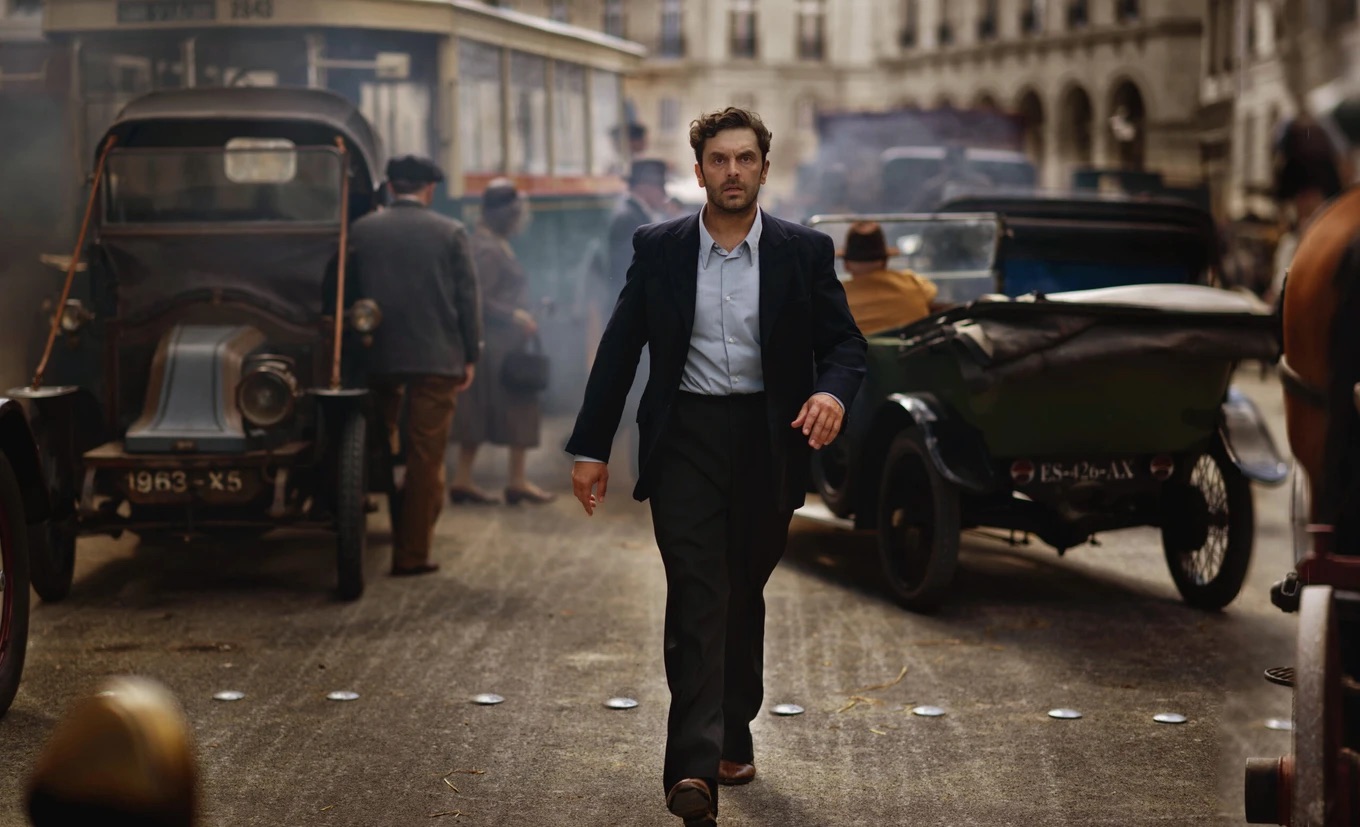
Pierre Salvadori toys with that challenge in La Vénus Electrique (The Electric Kiss), the opening night film of the 79th Cannes Film Festival. Set in Paris in 1928, the film follows Suzanne (Anaïs Demoustier), a jaded performer in a circus that feeds false love and romance to a desperate audience. One late night, a drunken painter named Antoine (Pio Marmai) stumbles upon her, seeking a medium to help him connect with his dead wife Irène (Vimala Pons) and offering cash for the trouble. Suzanne, eyes on the francs, reluctantly agrees and goes through the smoke-and-mirrors spectacle of “communicating” with Irène.
Antoine is deeply moved by the experience and offers Irène more money to serve as his medium on retainer. The distasteful gig is further complicated when Armand (Gilles Lellouche), Antoine’s art dealer, discovers Suzanne’s deception. Surprisingly, he offers to pay her a mouth-watering sum because her deception has broken through Antoine’s grief-inflicted painter’s block. To prepare for her role, Suzanne reads through Irène’s journals, which recap her relationship with Antoine. She soon finds, through those entries, that their relationship is far more complicated than Antoine suggested.

From a Hollywood perspective, The Electric Kiss blends the plot of the 2016 Will Smith vehicle Collateral Beauty and the narrative device of the 1996 Oscar winner The English Patient, adding a large scoop of droll humor. That scoop helps balance out the moral repugnance that made the former film so distasteful. Salvadori knows that pretending to be the spirit of a man’s dead wife is not only cruel but also deeply stupid. He isn’t afraid to laugh at the expense of his premise, keenly demonstrating the unseriousness of Suzanne and Armand’s scheme.
It makes for some brilliant, engaging sight gags, like Suzanne using an umbrella to pull on a food cart so she can grab a grape during a seance with Antoine, or dramatically faux-fainting so she can put in her “possessed” contact lenses. He also grants his characters the sense to know that this plot is very much beneath them.

And yet, Salvadori doesn’t reduce his characters to flat stereotypes, even in the midst of their worst behavior. Suzanne trips into this comedy of errors largely because she is in deep debt to the circus owner, with her only pathway to freedom being a bottle of Opium hidden in a drawer. Her destitution doesn’t excuse her choices, but they are understandable, especially when said owner attempts to coerce into a sexual relationship.
On the opposite side is Antoine, the unwitting victim of the scheme. Antoine is desperate to connect with Irène, but Salvadori gives him moments of skepticism that make his belief in Suzanne’s “gifts” gently, impactfully sad. He’s also given space to be dashing and insecure about his talent. Even Armand, who might be the outright villain in a less intricate film, is granted more dimensions and nuances.
There are a few times when The Electric Kiss’ efforts to enrich its characters lead to a somewhat overcomplicated narrative. Suzanne and Armand’s scheme is complex enough on its own, but Salvadori also folds in a quadruple dynamic between the four main characters that spans the past and present. It’s juicy in a messy, soap opera kind of way, but it also strains credulity. The most surprising relationship in the quad is mostly told through a flashback montage via Irène’s journal, and the montage doesn’t fully convince us on what draws the couple together. Complicating the relationship is how Salvadori structures it as a twist that recontextualizes how we perceive the quadruple. By doing that, it robs us of the chance to fully care about that pair, which leaves the quad feeling lopsided instead of equally compelling.

What helps keep The Electric Kiss light on its feet despite the narrative tangles is its very charming cast. Anaïs Demoustier’s beautifully expressive face locks into all of Suzanne’s complicated, contradictory emotions. She isn’t afraid to go broad in service of the film’s silliest scenes, but reins it in to avoid caricature. Pio Marmai is equally adept with Salvadori’s comic rhythms, wonderfully balancing desperation and charisma while seeding palpable grief throughout his scenes. Gilles Lellouche turns in the film’s most surprising performance, playing Armand with bone-deep sadness beneath his ruthless ambition, stemming from Armand’s unrequited love and desire to keep Antoine from the same fate.
The Electric Kiss is a wacky, shameless, and blissfully charming film that manages to send up hollow meditations on grief while still having something profound to say about grief in its own right. Pierre Salvadori and his cast earn every smile they get out of us, and are adept enough to even make a very tricky ending work without losing their momentum. The opening films at Cannes have a reputation of being subpar compared to the rest of the slate. You wouldn’t know it this year.


Leave a Reply