


If there is one thing that unites the following performances, it’s their collective ability to convey the yearning for connection and recognition that can often escape us in everyday life. The characters that these talented actors portray come from widely varying circumstances. One is a journalist, another is a boarding school cook, and there is even a Prince of England. And yet, they all want similar things, and their actors deploy a brilliant, thoughtful mix of skills, techniques, and emotional candor to bring those desires to life.
As I wrote in last year’s list, this is not an awards season prediction list (although there are more than a few contenders here). Rather, these performances that left some kind of mark and have lingered in my mind long after I first (or second, or third) saw them. Try as I might, this is also not a comprehensive list, as there are many films I missed out on. (That said, if I encounter one that is worthy of recognition, I will update this piece.)
Without further ado, these are the performances I considered the best of 2023.
Andrew Scott, All of Us Strangers

All of Us Strangers grapples with the lingering effects of arrested development, how past traumas keep us from living fully in the present. Andrew Scott conveys that suffocating tension as he visits with the ghosts of his character Adam’s long-dead parents (Claire Foy and Jamie Bell). Through hesitant eyes and physicality, Scott materializes Adam as both a weary adult and a bruised inner child, thoughtfully modulating between them in each affirming or disappointing interaction with his parents. He is particularly shattering when he manifests adult and child Adam at the same time, as he does in a pivotal moment of forgiveness and acceptance with his father. Scott’s unwavering honesty elevates his emotional balancing act beyond just extraordinary skill to something unforgettable.
Aunjanue Ellis-Taylor, Origin

Origin is one of the year’s most challenging films. A pseudo-adaptation of Isabel Wilkerson’s Caste: The Origins of Our Discontents, filmmaker Ava DuVernay pushes the boundaries of the narrative form to simultaneously examine the deep roots of prejudice and follow a unique journey through paralyzing grief. It’s a lot of film to process. Thankfully, we have Aunjanue Ellis-Taylor to ground us. She guides us through Isabel’s remarkable reporting on the complicated threads of race, class, gender, and, ultimately, caste, with sensitivity but unsparing resolve. Ellis-Taylor balances Isabel’s passionate work with the suffocating pain she feels after losing her husband, mother, and cousin within a year. You feel the weight of Isabel’s world and the greater one as she treks across the globe to tell this vital story. Ellis-Taylor’s steadfast perseverance and intense vulnerability are indispensable to this complex, tremendous film.
Bradley Cooper, Maestro

The purported appeal of biopic performances is to see an actor “disappear” into a recognizable figure, demonstrating a tangible skill that audiences can measure against real life. Despite the controversies, Bradley Cooper’s performance as legendary composer Leonard Bernstein in Maestro isn’t impressive because of physical disappearance. He stuns by using his persona to approximate Bernstein’s emotional reality. Cooper molds his zippy comic timing to convey the musician’s meticulous restlessness and refusal to submit to convention. His eyes’ inner, contrasting conflict gives voice to the unspeakable fears of being unfulfilled, irrelevant, and, ultimately, alone. Everything recognizably Bradley Cooper is before us; there is no disappearance. And yet, who Bernstein was on and off stage feels acutely authentic. Cooper channels rather than transforms, resulting in a beautifully intimate performance that reinforces the formidable talents of both actor and subject.
Charles Melton, May December

It takes hefty talent to pull focus from two Oscar-winning actresses in an All About Eve-style grudge match. That’s what Charles Melton does in Todd Haynes’s film May December. Melton plays Joe, a grown victim of Gracie’s (Julianne Moore) grooming and sexual abuse of him, to be documented in a film starring actress Elizabeth Barry (Natalie Portman). While Moore and Portman are needling each other, Melton walks around the edges like a ghost as Joe realizes his childhood was ripped from him. When Joe finally musters the courage to tackle his complicated feelings head-on, Melton’s ache and shattered sense of self are heartbreaking. Even playing against two dynamic screen presences, Melton commands your attention. He is the film’s tortured, horrified soul.
Cillian Murphy, Oppenheimer

The end of civilization rests in Cillian Murphy’s gaze. Oppenheimer requires an interior performance of a man always thinking about science and its intended and unintended consequences. Oppenheimer isn’t one to scream in horror upon hearing that the U.S. dropped the atomic bomb on Hiroshima and Nagasaki. He won’t lash out at the blatant attempts by the U.S. government to cast aspersions on his character to discredit him. He watches, observes, and takes the lashes to his spirit without a sound. Murphy never lets the psychic cost of his actions and those done to him escape his grasp. He wears every wound on his face, and Nolan’s claustrophobic framing makes it impossible to ignore. It’s appropriate that a film exploring the magnitude of humanity’s hubris would yield one of the year’s most arresting performances.
Colman Domingo, Rustin

There is no containing Colman Domingo in Rustin. He is an inferno consuming a building or forest, a ferocious blaze that swallows everything nearby. The energy he brings to the role of civil rights leader Bayard Rustin, the chief architect of the 1963 March on Washington, is infectious. He moves and speaks as if failing to capitalize on every second is an abject failure in the fight for social equality. Domingo is brash, bold, and unapologetic in expressing what Bayard and the world he inhabits need to survive and thrive. Beneath his steamrolling, quick-speech bravado is a bone-deep vulnerability that conveys Bayard’s desire for platonic and romantic intimacy. In Domingo’s expert hands, Bayard Rustin is freed from the shadows of history and transformed into a beacon of justice that he always should’ve been. Bayard returns the favor in kind, giving Domingo the leading man platform he’s long deserved.
Danielle Brooks, The Color Purple

It’s on from the millisecond she appears on screen. Danielle Brooks blasts into The Color Purple like a rocket as Sofia, igniting the world of Celie (Fantasia Barrino), Harpo (Corey Hawkins), and Sir (Colman Domingo) with her uncompromising vibrance. With glee in her eyes and powerful songs in her voice, Brooks takes hold of your senses and never lets go. You’re wondering what Sofia is doing even when she isn’t on screen. Brooks makes you laugh and breaks your heart in equal measure, communicating as much in dreadful silence as she does through joyful noise. Even if you were lucky enough to catch her portrayal of Sofia on Broadway, what she brings to the film version is revelatory, one of the best performances ever in a movie musical.
Da’Vine Joy Randolph, The Holdovers

The Holdovers‘ irrepressible warmth comes from more than Alexander Payne’s evocation of ’70s-era aesthetics and found family themes. Simmering underneath is rubbed-raw grief, beautifully conveyed by Da’Vine Joy Randolph. Playing Mary Lamb, Barton Academy’s cafeteria worker who stays behind to feed the holiday stragglers, Randolph brings weariness, wit, and compassion to a role that could’ve been one-note comic relief with a less thoughtful pen. Payne grants her complexity by framing Mary’s winter break through her son’s death. Randolph carries Mary’s loss with her in every scene. You ache with her as she watches game shows and when she inevitably breaks down during a holiday party. Her heartrending journey further bolsters her genuine connections with her equally lovely co-stars, Paul Giamatti and Dominic Sessa. Randolph’s poignant performance deepens the film’s cozy atmosphere and holds it all together.
Erika Alexander, American Fiction

American Fiction is a fast and furiously funny film that fires on all cylinders. If you aren’t careful, you could land on your back against its onslaught of chest-clutching jokes and brutally incisive critiques of how audiences perceive Black art. Erika Alexander keeps us steady and upright. She exudes a stabilizing warmth as Coraline, Monk’s (Jeffrey Wright) neighbor and love interest, that counteracts the chaos surrounding them. Alexander is also shrewdly funny in her own right. She can keep Monk humble with a cutting but warm-hearted quip and will readily push back if he tries discounting her as he loses control of his career and family. Whatever scenario Coraline finds herself in, Alexander is a steadfast delight. American Fiction has an excellent ensemble, and she is an indispensable pillar.
Emma Stone, Poor Things

It’s a cliché when assessing performance, I know. Surely there’s another word to describe an actor’s work besides “fearless,” right? And yet, the absence of anything resembling fear is the hallmark of what Emma Stone brings to Bella Baxter in Yorgos Lanthimos’ pseudo-steampunk coming-of-age odyssey Poor Things. Every single move she makes and line she speaks is unbound from vanity or pretense. You feel Stone’s complete trust in her director so she can freely inhabit Baxter as she embarks on a journey of self-discovery and sexual agency that eviscerates the conventional and defies the reasonably daring. She is hilarious, profound, and undeniable. In an effort to avoid the cliché, I will say that it will likely go down as one of the definitive acting performances of the decade.
Franz Rogowski, Passages

How much must the lover of an unrepentant narcissist deal with before they give up? For Passages, the answer is “a lot.” As borderline diabolical as the perpetually frustrated filmmaker Tomas can be to his long-suffering husband Martin (Ben Whishaw) and lover Agathe (Adèle Exarchopoulos), you can perhaps understand why they stick with him. Frank Rogowski takes the insufferable Tomas and colors him in with shades of vulnerability, self-awareness, and smoldering passion that are intriguing, if not outright appealing. He carefully contrasts bold confidence (evident in one of the year’s best wardrobes) with brittle emotional security while still finding space to play cruel mind games. Rogowski’s frantic but tender aura encourages you to project hope onto Tomas that he doesn’t deserve. Tomas is awful, but Rogowski is awfully compelling, and his performance will keep you coming back for more.
Glenn Howerton, BlackBerry

Even on mute, you can hear Glenn Howerton in BlackBerry. Howerton’s face erupts in frustration as his character, former co-CEO of Research in Motion Jim Balsillie, deals with hapless employees he can barely stand who won’t easily capitulate to the ruthless demands of capitalism. When he isn’t verbally tearing boardrooms to shreds (“I’m from Waterloo” is a contender for speech of the year), Howerton silently shouts, conveying Jim’s irritation, incredulity, fury, and even fear with a steely gaze. Unchecked hubris is at the center of every mode he plays, making him exciting to watch, even if Jim’s downfall is predictable. You can watch BlackBerry on mute and still hear Howerton, but you’ll miss the full force of one of the year’s most thrilling business performances.
Halle Bailey, The Little Mermaid

Disney’s live-action remakes often lack what made their animated versions cultural touchstones: magic. They either remind you what you loved about the originals or poison your nostalgia with their soullessness. Halle Bailey’s performance as Ariel breaks The Little Mermaid (2023) from that dismal paradigm. Bailey sparkles on screen, moving from shot to shot with youthful spirit and thoughtful curiosity. Her scenes with Jonah Hauer-King’s Prince Eric are the most romantic and charming Disney has been in years, to the point that you wish they’d dispatch with the not-great underwater scenes altogether. And then there is that voice. Her performance of “Part of Your World” is a showstopper, evoking Barbra Streisand in Funny Girl and Jennifer Hudson in Dreamgirls. Bailey is the primary reason The Little Mermaid grazes upon “magic.”
Juliette Binoche, The Taste of Things

Benoît Magimel isn’t special; we would all risk everything to be in Juliette Binoche’s presence indefinitely. The Taste of Things (titled La Passion de Dodin Bouffant in France) is part-loving tribute to French cuisine and part-refreshingly adult romance between chef Eugénie (Binoche) and gourmet Dodin Bouffant (Magimel). Binoche is radiant, even after running herself ragged to prepare quite possibly the most sumptuous dishes ever captured on film. But more than that, Binoche carries herself with a beguiling self-awareness and mature sensuality, making her irresistible to Dodin and the audience. Like Eugénie, Binoche’s performance is unassuming and understated, but it leaves a brilliant aftertaste.
Lily Gladstone, Killers of the Flower Moon

What’s it like to watch the soul slowly drain out of someone until there’s nearly nothing left? Thanks to a mountainous Lily Gladstone, audiences of Killers of the Flower Moon know. We watch in painstaking detail how Ernest Lockhart (Leonardo DiCaprio) attempts calculated spiritual murder of his spouse Mollie (Gladstone) in order to claim her Osage Nation inheritance. In the beginning, Gladstone’s Mollie is bemused but charmed by Ernest’s bumbling overtures, cognizant of the lopsided dynamics but intrigued enough to entertain them. Mollie’s sisters systemically die in barely-disguised circumstances, Gladstone’s bemusement melts into paranoia, exhaustion, fear, and confusion. She communicates most of this in silence, as Mollie retains enough of her self-awareness to hide her innermost thoughts from the outside world. But we hear and see it all. Martin Scorsese effectively showing the bumbling rot at the bottom of the American soul, but Gladstone is how we feel it.
Margot Robbie, Barbie

It only took one first-look image of Barbie to seal the deal. Margot Robbie’s impossibly bright smile driving in her pink convertible immediately set the world’s imagination alight. In the film itself, Robbie doesn’t just look like the perfect Stereotypical Barbie. (Which is when you look like Margot Robbie, as the film’s narrator points out.) She imbues her plastic character with a warm inner glow that blankets Barbie’s journey of self-discovery. When she realize that the world she thought was shaped in her perfect image, her shock and disappointment is palpable. Barbie gets up to a lot: she upends Barbie Land with irrepressible thoughts of death, outruns bumbling Mattel executives, and finds glimmers of humanity’s worthiness. Through it all, Robbie’s gentle grace under immense pressure helps the blockbuster achieve its walloping emotional power. While she undeniably looked the part, Robbie is poised to redefine Barbie for future generations.
Michael Fassbender, The Killer

Of the two films this year that leverage Michael Fassbender’s trademark intensity, The Killer is far and above the best. David Fincher delivered a slick, funny film about a contract killer’s existential breakdown over a botched hit. For his part, Fassbender gets plenty of mileage from his meticulous stoicism. He makes what could’ve been a staid voiceover into something surprisingly engaging and entertaining. His ice-cold efficiency is unwavering, even when it seems like everything around him is falling apart. That commitment makes his character’s few moments of vulnerability genuinely affecting. After an extended absence, it feels right to have Fassbender back on screen unsettling us all.
Nicholas Galitzine, Red, White & Royal Blue

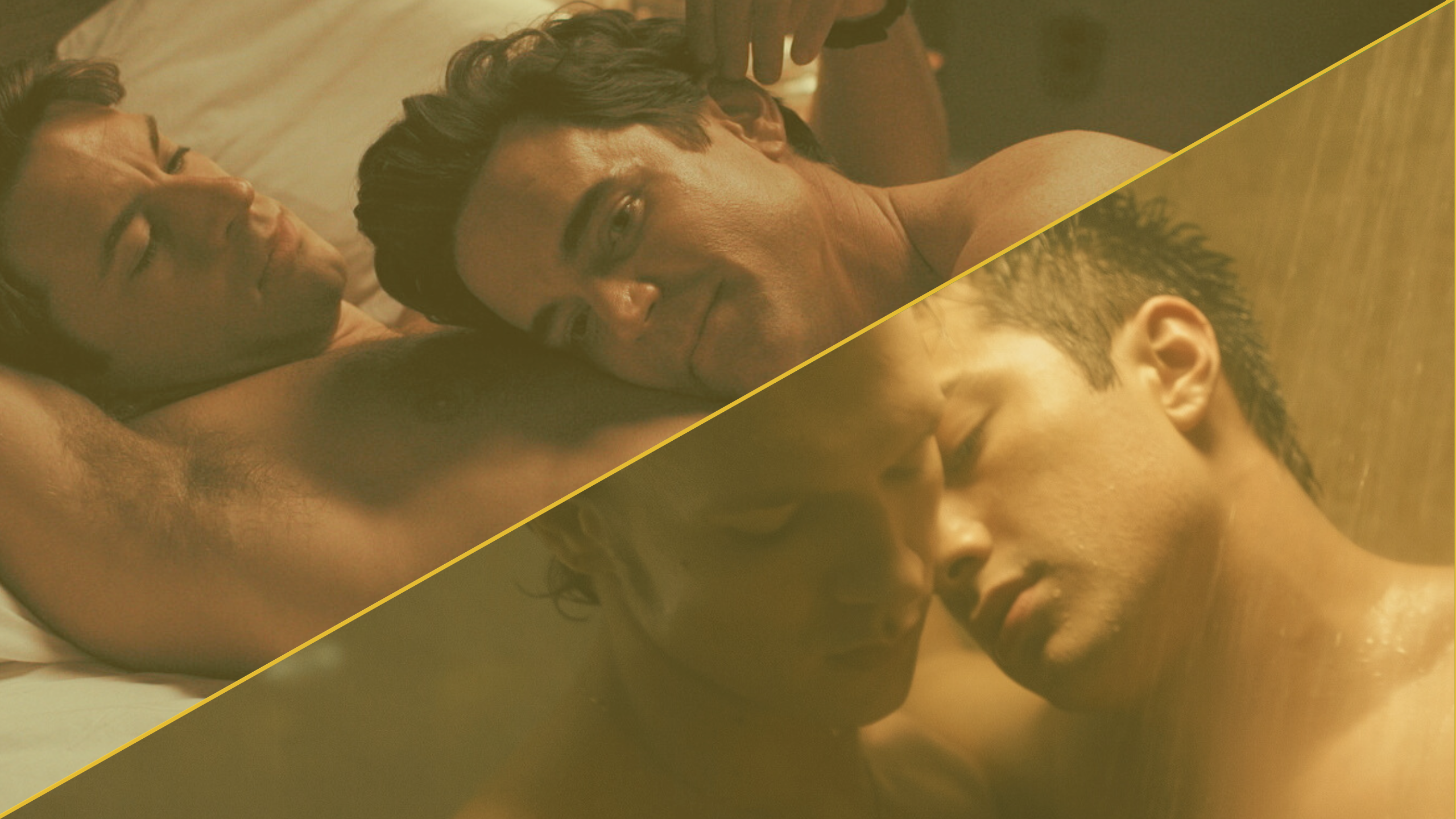
Red, White & Royal Blue doesn’t require much. It’s a breezy rom-com built around a ridiculous conceit involving a British prince, the son of the American president, and a wedding cake. It’s silly, charming, and doesn’t need to be anything else. Nicholas Galitzine gives more, though. As Prince Henry, Galitzine conveys palpable vulnerability through his eyes as his enemy-turned-lover Alex Claremont-Diaz (Taylor Zakhar Perez) wears down his defenses. In one viral moment, the gravity of Henry’s feelings for Alex cause Galitzine’s face to crumple in existential terror. You would expect that performance from a Luca Guadagnino film, not a rom-com involving a fallen wedding cake. Galitzine’s intensely vulnerable take deepens a featherweight film into one of the year’s most watchable. He is an actor to watch out for, whether he continues elevating streaming titles or steps into more challenging roles.
Ryan Gosling, Barbie

Yes, Ryan Gosling in a bleach-blond dye job, fur coat, and an ironically unironic headband is everything. Sure, “I’m Just Ken,” with its Singin’ in the Rain-inspired dance number, is a verified bop. Underneath the aesthetic zaniness is a razor-sharp comedic performance that skewers toxic masculinity’s stupidity and empathizes with Ken’s empty-headedness. Gosling’s every line reading is gold, from his legendary “My job is just beach” proclamation to his takedown of Barbie outside the Mojo Dojo Casa House. He modulates perfectly between taking Ken seriously and slyly acknowledging how ridiculous, and ridiculously fun, the doll is. Even without the fur coat, Gosling gives one of the year’s most delightful performances. Everything else is just “bonus.”
Robert Pattinson, The Boy and the Heron

In a post-Robin Williams in Aladdin world, scoring A-list actors for an animated film has become key to its bankability. However, the best voice acting performances don’t just read the words off the page in a booth. They mold their tones and inflections into the characters they’re playing. Sometimes, like Williams and the Genie, the character is an extension of their persona. Other actors make themselves audibly unrecognizable from their animated counterparts.
Robert Pattinson does that in the English dub of Hayao Miayazaki’s The Boy and the Heron. Pattinson absolutely vanishes into the role of the magical bird Grey Heron. He references Masaki Suda’s definitive Japanese-language performance and co-star Willem Dafoe’s stranger character work to craft a gleefully unhinged frenemy to the traumatized protagonist Mahito. There is no trace of Pattinson on the track, which makes for an imaginative, immersive experience in its own right. Just think of how his body moved as he sneered Mahito’s name or fretted over the hole in his beak. The possibilities are endless. Pattinson’s shattering of those boundaries makes it one of his best performances to date, and arguably the best voice-acting in a film this year.
Sandra Hüller, Anatomy of a Fall and The Zone of Interest

If one were to boil down Sandra Hüller’s work in 2023 into a pithy phrase, “the art of not giving a fuck” would probably suffice. Of course, that would undersell her intricate performances in Anatomy of a Fall and The Zone of Interest.
As Sandra in Fall, Hüller keeps her cards clutched to her chest. She keeps audiences guessing about her guilt in killing her husband while emphasizing how it’s beside the point. Her unflappability in battling the French legal system and the court of public opinion is riveting. She is jaw-dropping when she loses her composure during a flashback argument with her husband. In Interest, Hüller uses her steely resolve to portray Hedwig, the wife of the commandant of the Auschwitz concentration camp. Hüller is chilling in conveying how easily Hedwig moves through life as the horrors of humanity operate in the background. She initially seems inured to the cruelty, but you soon realize her complicity and gleeful indulgence. In both films, Hüller confronts you with the complexities of the human condition. It is some of the year’s most harrowing acting work.
Teo Yoo, Past Lives

Several of this year’s best performances feature some demonstration of yearning. The best example is Teo Yoo in Celine Song’s lovely debut feature, Past Lives. Yoo’s character, Hae Sung, seeks out his childhood friend Nora (Greta Lee) online 12 years after she emigrates to Canada from South Korea. Although Hae Sung can’t quite say how he feels for Nora, Yoo’s face says everything we need to know. When Nora breaks off communication with Hae Sung to focus on her studies, Yoo practically folds into himself in quiet pain. A decade later, when Hae Sung flies to New York to meet Nora, you see the wonder and fear crest over Yoo’s face upon seeing her in person. He runs the gamut of what ache looks like on screen and lasers in on the finest details to bring it to life. It is an understated but remarkably potent performance.
Trace Lysette, Monica

In Monica, Trace Lysette plays a woman who returns home to her estranged family to care for her mother Eugenia (Patricia Clarkson) suffering from dementia. Monica embarked on her transition after her mother dropped her off at the bus stop and effectively ended all communication. Lysette carries the trauma of neglect and abandonment in every movement she makes. She is achingly tentative, visibly making herself smaller as she navigates familiar but unsafe spaces. Monica and Eugenia make something resembling peace, but Lysette beautifully conveys how brutally conditional it is. Her performance — aching, raw, and beautiful — is a revelation.
Teyana Taylor, A Thousand and One

A Thousand and One‘s Teyana Taylor is always moving. It’s a consequence of Inez’s life, frozen in time while in prison and always at risk of being upended due to financial and housing insecurity. To care for herself and her son Terry, Inez lives restlessly. Taylor fully embodies that restlessness, and how ferociously unsettled she is trying to establish a normal family life. In her eyes and how she speaks, we experience a lifetime of pain, anger, and joy, stuff we’ll never fully know other than their mere existence. Taylor’s lived-in, natural approach to telling Inez’s story garners empathy for even her most difficult, even shocking choices. She ensures we never miss the magnitude of every look, word, and decision Inez makes. It is a towering effort.



Leave a Reply